
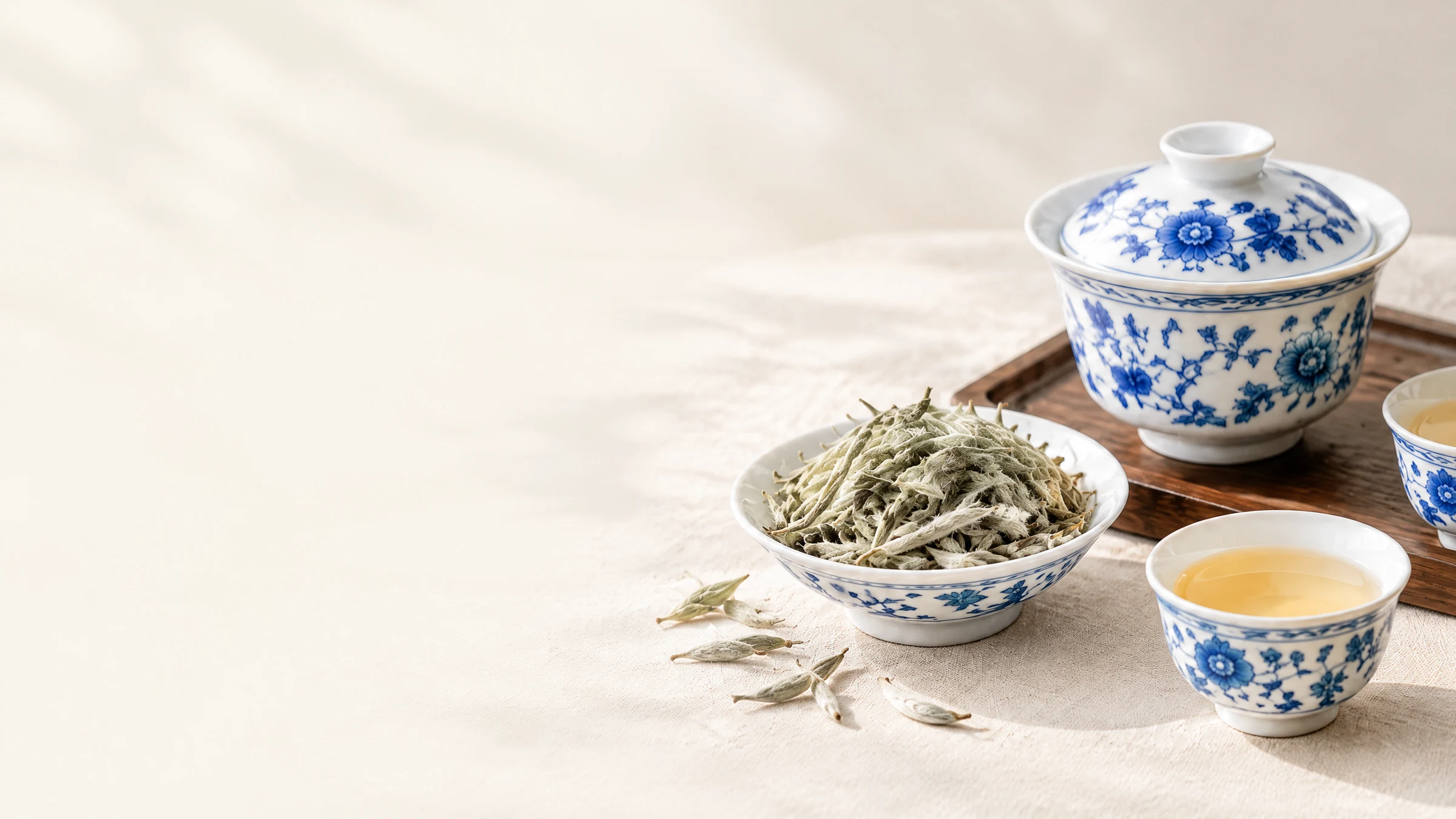
Wilderness-grown white tea and aged white tea cannot have their quality guaranteed by name alone. A more reliable way to assess them is to see whether the growing region, cultivar, picking season, production date, storage records and present-day tasting experience support one another. This is also the starting point for developing sound judgement about white tea.
Wilderness-Grown White Tea: Ask About Origin First, Then Consider Style
“Wilderness-grown” is generally used to describe tea plants that are less subject to intensive planting and management, and grow in a natural environment. When choosing tea, ask about the specific growing region, picking standards, production year and producer, rather than judging by the words “wilderness-grown” alone. When tasting, observe whether the aroma is natural, whether the liquor has depth, and whether the spent leaves are consistent with the description of the raw material.
Aged White Tea: Age Is Not the Only Answer
The age of white tea needs to be understood in the context of its storage conditions. Keeping it dry, away from odours, high temperatures and dampness are basic storage principles. Tea stored in different conditions may also develop different aromas and liquor textures. When choosing tea, check the packaging, batch, origin and storage records, then verify them by brewing the tea yourself.
Keep Your Own White Tea Tasting Records
For each white tea, record the date, amount of leaf, water temperature, steeping time, aroma, liquor texture and number of infusions. Consistent comparisons are a better way to develop reliable tasting language than memorising descriptive terms.